South Africa
14 Uitenhage Road, North End, Port Elizabeth, South Africa, 6001
+27 41 811 9729 Email Us
14 Uitenhage Road, North End, Port Elizabeth, South Africa, 6001
+27 41 811 9729 Email Us


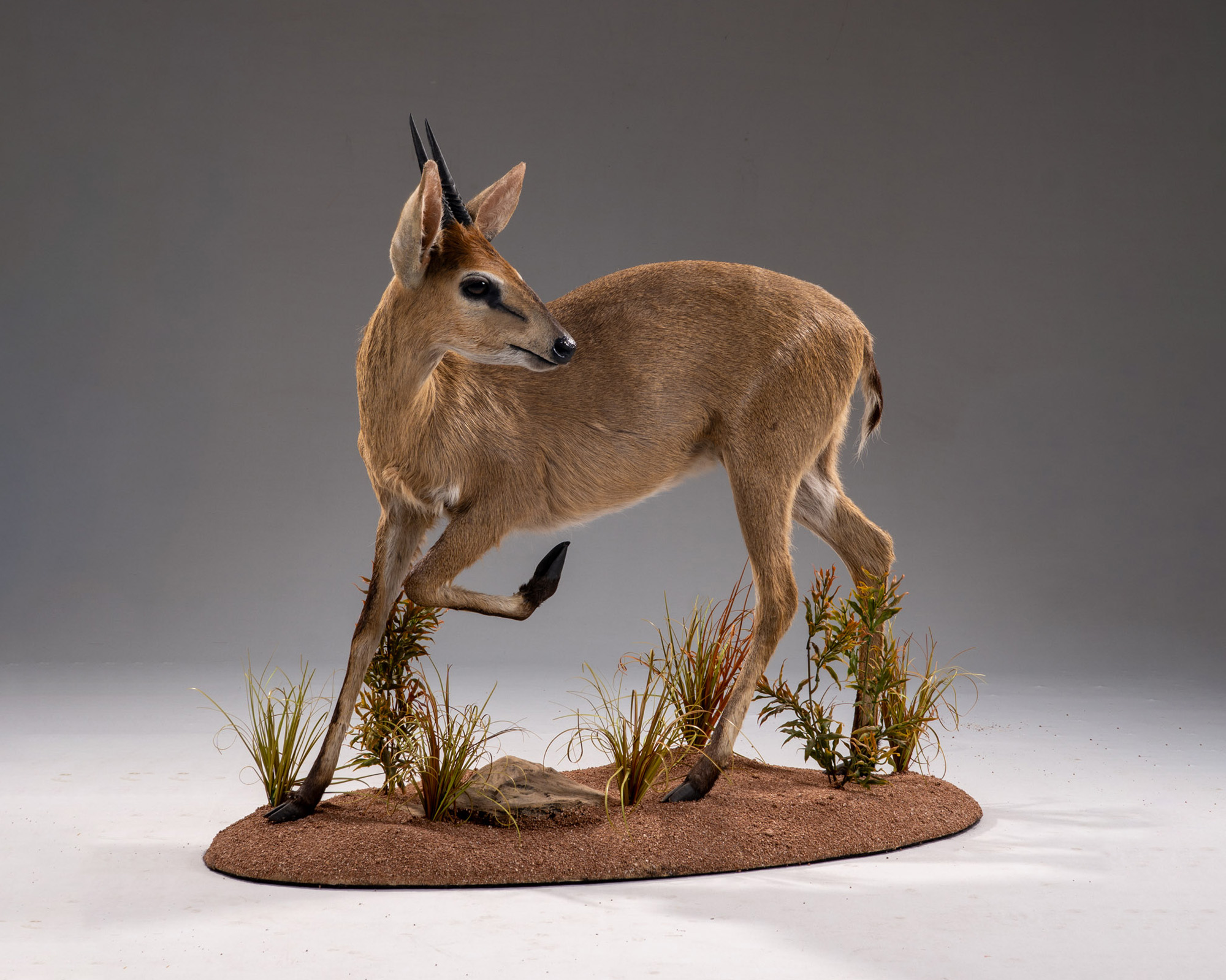
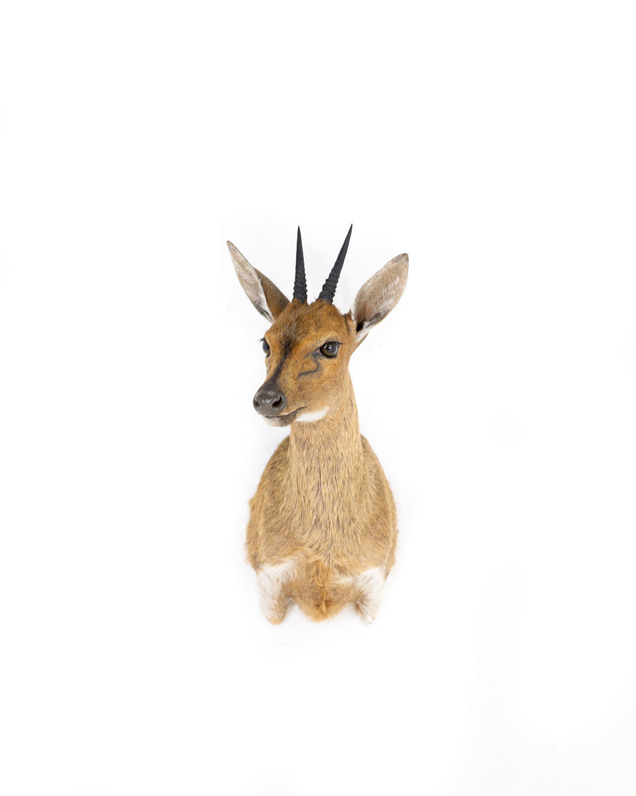
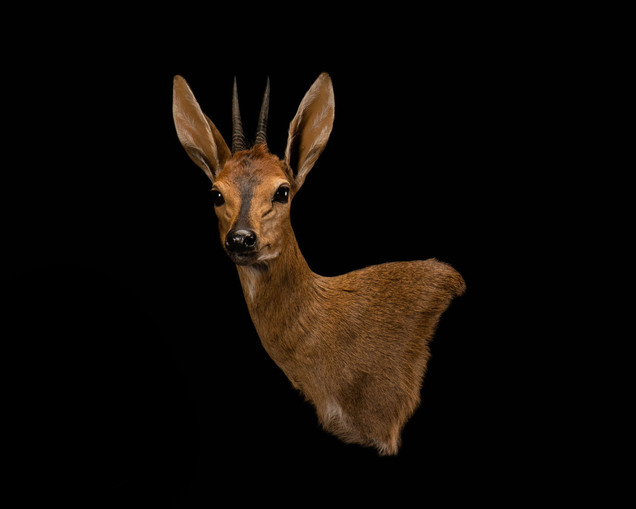
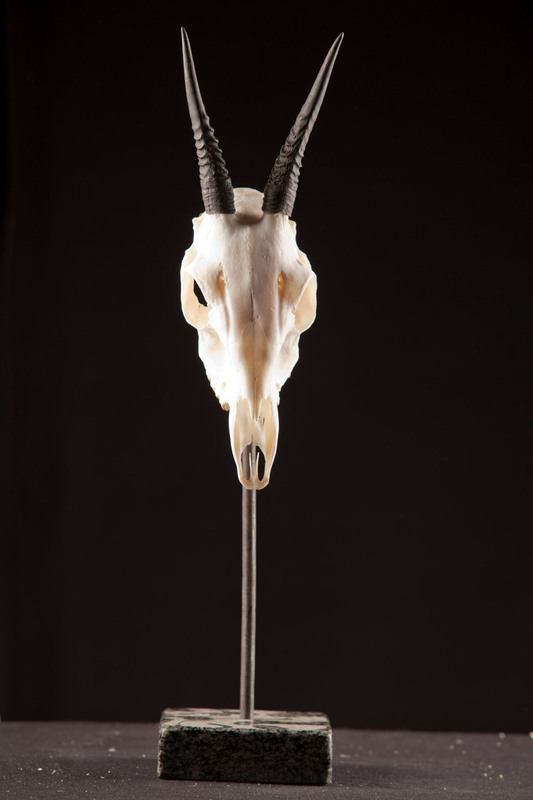
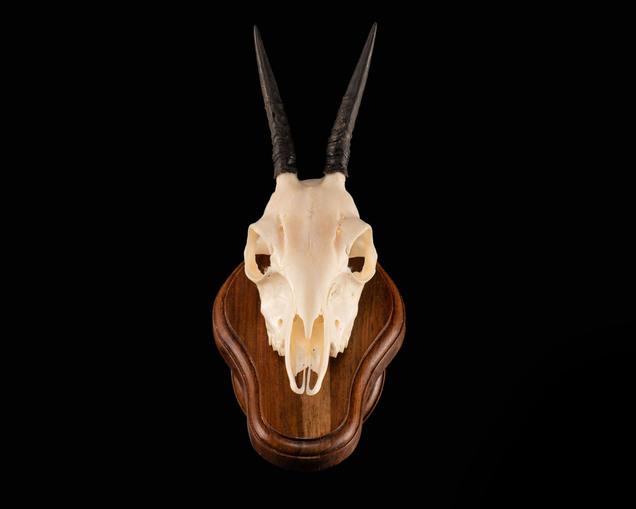
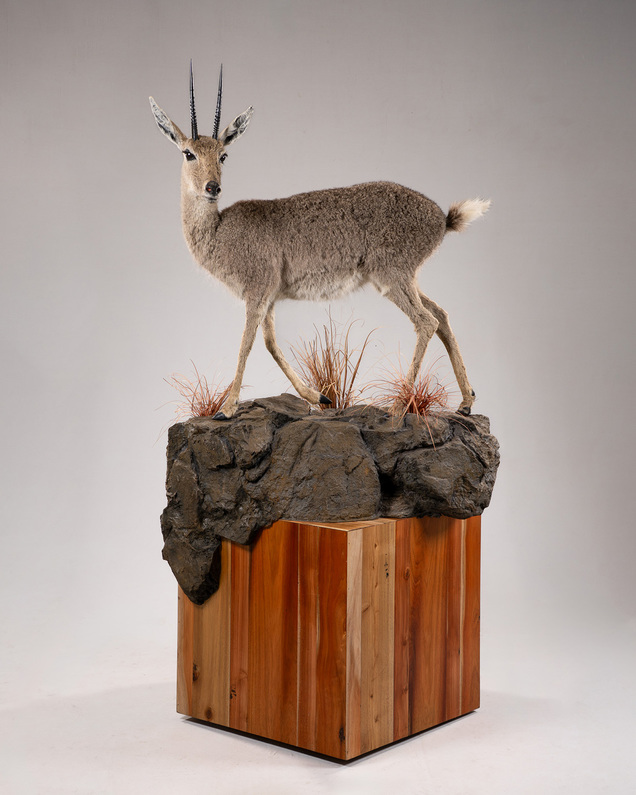
The Common Duiker is a small and graceful antelope, recognized for its delicate features. It forms part of the Tiny Ten Collection, but is the largest and most widespread of the Duiker variations. This specimen is hunted across many countries throughout Africa.
The ideal choice for small antelope like the Common Duiker is to mount them as a full mount.
The three species of duiker include the blue duiker, the red duiker and the grey duiker also known as the common duiker. Blue duikers are the smallest of the duiker species, known for its compact size and shy nature. The red duiker is identified by is chestnut red coat and short horns. The grey duiker is one of the largest duiker species, easily recognised by its grey-brown coat.
Duikers rely on camouflage and speed when threatened. Living up to its name, it will 'dive' into thick vegetation or bush to take cover. If these options of avoidance are not possible, they might use their horns to defend themselves; however, this is not their first instinct.
Common duikers can be found in Sub-Saharan Africa, specifically in areas where the vegetation is thick enough to take cover, as this is their main method of defence from predators.
Duikers communicate through three methods: scent marking, vocalisations, and body language. Duikers use secretions from their face and orbital glands to mark their territory or signal their presence to other duikers. They are known to make high-pitched whistles or calls when startled or feeling threatened.
Duikers can go months without water, as they get most of their moisture from leaves, plants, fruits, and various vegetation they eat. This allows them to survive in areas where free water is scarce.